Nausicaä of the Valley of the Wind
Vibe
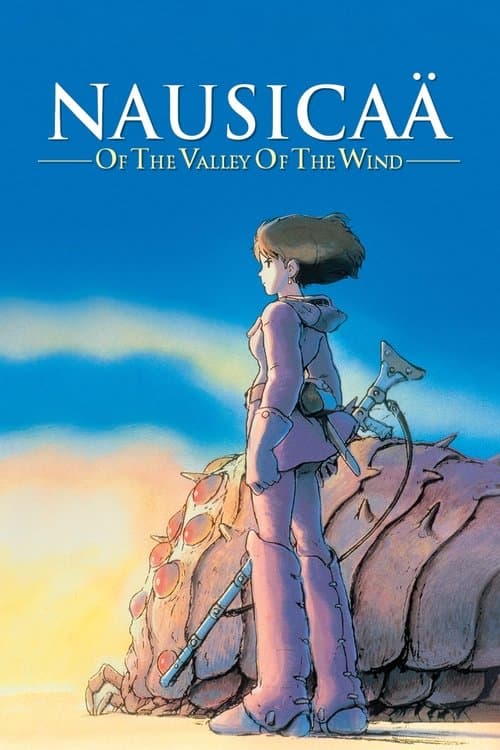
Hayao Miyazaki’s post-apocalyptic fantasy follows Nausicaä, the compassionate princess of a small valley kingdom living on the edge of a poisoned forest in a world scarred by ancient catastrophe. When rival human factions threaten to ignite another devastating war, Nausicaä is pulled into a conflict that tests her belief that humanity and nature are not enemies but part of the same fragile balance. Blending aerial adventure, ecological warning, and spiritual wonder, the film builds a richly imagined world where beauty and danger coexist in every frame. With its sweeping scale, moral clarity, and deep empathy for all living things, Nausicaä of the Valley of the Wind becomes a story about courage, understanding, and the possibility of harmony in a wounded world.
Watch for
- How Miyazaki makes the Toxic Jungle feel both terrifying and strangely beautiful, framing it not as a simple evil but as a living system with its own hidden logic.
- Nausicaä’s interactions with the Ohmu, especially the way her calm empathy interrupts cycles of fear and violence that other characters assume are unavoidable.
- The contrast between the film’s sweeping aerial movement and its scenes of ecological ruin, which gives the world a sense of wonder without softening its devastation.
- How the story gradually shifts from post-apocalyptic adventure to something more morally expansive, revealing that understanding the world matters more than conquering it.
Production notes
Nausicaä of the Valley of the Wind was made at Topcraft, a small animation house Hayao Miyazaki had worked with on earlier projects, and it pre-dates the founding of Studio Ghibli by one year. Miyazaki had begun the source manga in Animage magazine in 1982, and the film adapts only the first volumes of what would become a much longer work he completed in 1994. Producer Toshio Suzuki and Isao Takahata both supported the production, and the financial and creative success of the film directly enabled the founding of Studio Ghibli in 1985. Joe Hisaishi composed his first score for a Miyazaki feature, beginning a four-decade collaboration that would define the studio's sound. Sumi Shimamoto voiced Nausicaä, with Mahito Tsujimura as Lord Yupa. The film was animated in approximately ten months on a tight budget, with Takahata acting as producer and shielding Miyazaki from corporate pressure during a famously demanding schedule.
Trivia
- Nausicaä's North American debut in 1985 was a Roger Corman–distributed cut titled Warriors of the Wind, edited down by 22 minutes and rewritten with new character names; the experience was so traumatic for Studio Ghibli that the studio adopted a strict no-cuts policy for all subsequent international releases.
- The film pre-dates Studio Ghibli's founding (1985) by one year and was animated at Topcraft; its commercial success directly enabled Miyazaki, Takahata, and Suzuki to establish the new studio.
- Nausicaä was inspired in part by the Hachimaki figures of Japanese folklore and by a real-world environmental disaster — the 1956 Minamata mercury poisoning, which shaped Miyazaki's lifelong interest in industrial contamination as a story subject.
- The God Warriors animation sequences were directed by a young Hideaki Anno, who would go on to create Neon Genesis Evangelion (1995); his fluid, destructive animation of the giants represents some of his earliest professional work.
- Joe Hisaishi's score was originally rejected by Miyazaki, who had wanted a different composer; Toshio Suzuki insisted on Hisaishi, and the resulting collaboration would extend across every Miyazaki feature for the next four decades.
Legacy
Nausicaä of the Valley of the Wind is the foundational text of what would become Studio Ghibli — a film whose commercial success directly funded the studio's founding the following year, and whose thematic concerns (environmental responsibility, female protagonists with moral seriousness, the ambiguous relationship between civilization and the natural world) would shape every subsequent Miyazaki and Takahata feature. The film grossed approximately ¥1.48 billion at the Japanese box office on a modest budget, an enormous return on investment that signaled the financial viability of Miyazaki's authorial approach. The traumatic 1985 American re-cut as Warriors of the Wind led directly to Ghibli's strict no-cuts policy and shaped the studio's later cautious approach to international distribution. The film entered the National Film Registry equivalent in Japan and has been continuously celebrated since, with restored editions and 4K re-releases keeping it in active theatrical circulation. Among Miyazaki's films, Nausicaä remains the one most explicitly engaged with environmental catastrophe as narrative subject — a concern that has only deepened in cultural weight since its 1984 release.