The Boy and the Heron
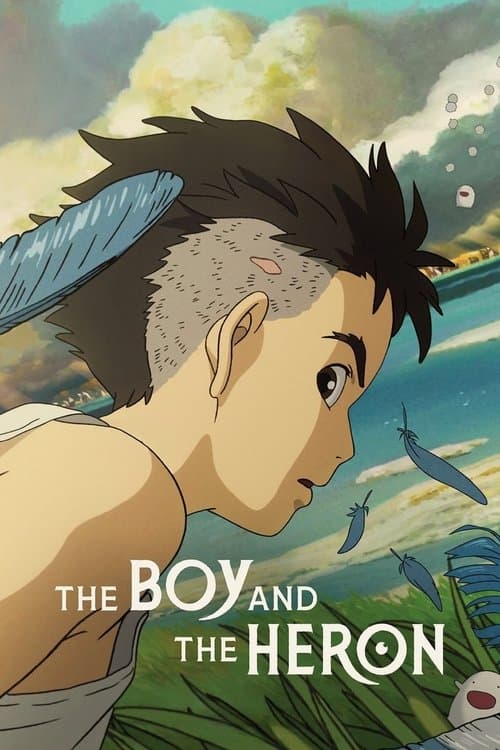
Vibe
Hayao Miyazaki’s enigmatic fantasy follows Mahito, a grieving boy sent to the countryside after the loss of his mother, where a strange gray heron lures him toward a hidden world shaped by memory, desire, death, and creation itself. As Mahito moves deeper into this unstable realm, the film unfolds less as a conventional quest than as a shifting inner journey, where grief, resentment, inheritance, and imagination are constantly changing form. Miyazaki fills the story with unsettling beauty and dream logic, allowing its images to feel deeply personal even when their meaning remains elusive. With its haunting atmosphere and emotional density, The Boy and the Heron becomes a story about sorrow, transformation, and the difficult act of choosing to live in an incomplete and wounded world.
Watch for
- How Miyazaki uses the heron as both trickster and guide, making each encounter with Mahito feel unstable, provocative, and emotionally charged rather than simply symbolic or explanatory.
- The contrast between the grounded reality of grief in the film’s opening and the shifting dream logic of the world Mahito enters, where fantasy becomes an extension of mourning, resentment, and unanswered feeling.
- The density of the film’s imagery—tower spaces, birds, fire, water, mothers, and surrogate families—which gives many scenes a layered quality that feels personal even when their meaning remains deliberately unresolved.
- How the film builds toward choice rather than clarity, using Mahito’s journey to ask not how loss can be explained, but how a person continues living after being changed by it.
Production notes
The Boy and the Heron was Hayao Miyazaki's return from retirement after The Wind Rises (2013) — production began in 2016, took approximately seven years, and reportedly cost around $60 million, making it Studio Ghibli's most expensive feature ever. Miyazaki refused to release any trailers, marketing materials, or even a synopsis before the film's July 2023 Japanese theatrical premiere — an unprecedented anti-marketing strategy that producer Toshio Suzuki defended as forcing audiences to encounter the film fresh. The Japanese title is How Do You Live? after Genzaburō Yoshino's 1937 novel of the same title (which appears as an object within the film). The film draws heavily on Miyazaki's own childhood — the firebombing prologue depicts events Miyazaki lived through, and the central Mahito-Natsuko family dynamic reflects Miyazaki's relationship with his own father and stepmother. Joe Hisaishi composed the score. Soma Santoki voiced Mahito, with Masaki Suda as the Heron, Takuya Kimura as Mahito's father, and Yoshino Kimura as Natsuko. The GKIDS English-language dub featured Christian Bale, Dave Bautista, Gemma Chan, Willem Dafoe, Karen Fukuhara, Mark Hamill, Robert Pattinson, and Florence Pugh. Suzuki has indicated the film is dedicated to Takahata.
Trivia
- The Boy and the Heron was released in Japan with no trailers, marketing materials, or even synopsis released before its July 2023 theatrical premiere — an unprecedented anti-marketing strategy that producer Toshio Suzuki defended as forcing audiences to encounter the film fresh.
- The film's Japanese title is How Do You Live? — taken from Genzaburō Yoshino's 1937 novel of the same name, which appears as an object within the film and was reportedly given to a young Hayao Miyazaki by his own mother.
- The film won the 2024 Academy Award for Best Animated Feature, making Hayao Miyazaki the only filmmaker to win the category twice for hand-drawn features (after Spirited Away in 2003); Miyazaki and producer Toshio Suzuki did not attend the ceremony.
- The Boy and the Heron grossed approximately $167 million worldwide, becoming Studio Ghibli's highest-grossing film in North America at $46 million domestic; it was also the first Japanese animated feature to win the Golden Globe for Best Animated Feature.
- Production took approximately seven years and cost around $60 million, making it Studio Ghibli's most expensive feature ever; Miyazaki was 82 when production began and 82 at release, and reportedly hand-drew approximately 60 percent of the film's key animation himself.
Legacy
The Boy and the Heron's release in 2023 was treated globally as a major cultural event — the return of the most celebrated living animation director after a decade-long retirement, and a genuine artistic statement rather than a victory lap. The film won the 2024 Academy Award for Best Animated Feature, the BAFTA, the Golden Globe (the first Japanese animated feature to win the Golden Globe in the category), and numerous critics' awards. It grossed approximately $167 million worldwide, becoming Studio Ghibli's highest-grossing film in North America. The film's release coincided with Studio Ghibli's September 2023 acquisition by Nippon Television Network, which secured the studio's institutional future after years of succession concerns. Critics treated the film as Miyazaki's definitive late-career statement, a synthesis of decades of preoccupations rather than a debut of new themes. Among Ghibli's films, The Boy and the Heron is the most thoroughly autobiographical — the wartime prologue, the Mahito-Natsuko family dynamic, the figure of the great-uncle as artist-ancestor — and the most deliberate engagement with Miyazaki's own mortality and creative legacy.