The Tale of the Princess Kaguya
Vibe
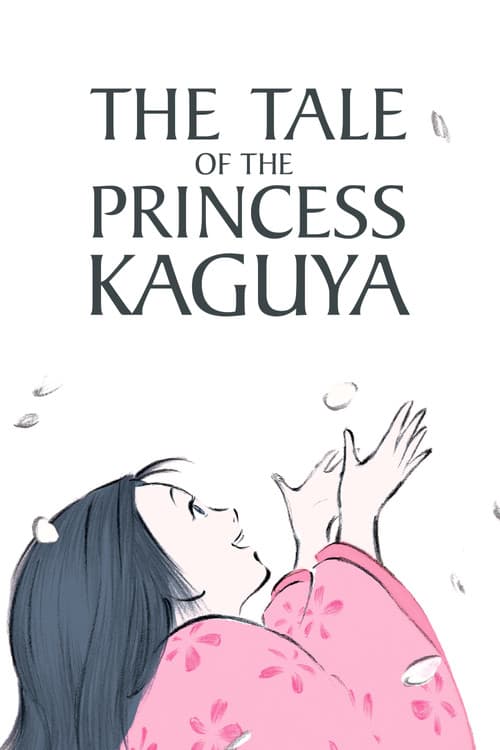
Isao Takahata’s luminous folktale follows a tiny girl discovered inside a bamboo stalk who grows with supernatural speed into a young noblewoman whose beauty draws admiration, expectation, and confinement in equal measure. As Kaguya is pulled further from the freedom of her rural childhood and into the rigid demands of status and ceremony, the film turns a story of wonder into something aching, restless, and quietly devastating. Its hand-drawn watercolor style gives every emotion a sense of movement and impermanence, as though the film itself might vanish like a memory while you are watching it. With its tenderness, sorrow, and spiritual depth, The Tale of the Princess Kaguya becomes a story about joy, loss, and the cost of being separated from the life that once made you feel alive.
Watch for
- How the watercolor linework and unfinished-looking motion make the film feel alive in a fragile, impermanent way, as though emotion itself is shaping the image from moment to moment.
- Kaguya’s changes in mood and movement, especially the contrast between her freedom in the countryside and the stiffness imposed on her once she is absorbed into courtly life.
- The film’s use of beauty as both gift and burden, showing how admiration, status, and idealization gradually become forms of confinement rather than celebration.
- The famous running sequence and the final celestial scenes, where Takahata allows style, feeling, and spiritual meaning to merge into some of the most overwhelming imagery in the Ghibli catalog.
Production notes
The Tale of the Princess Kaguya was Isao Takahata's final feature — he died in April 2018 at age 82 — and the most stylistically experimental Studio Ghibli film ever produced. Adapted from the 10th-century 'The Tale of the Bamboo Cutter' (one of the oldest extant Japanese narratives), the film employs a deliberately rough, gestural watercolor-and-charcoal style that mimics traditional Japanese ink painting. The technical challenge of producing this look in computer-assisted animation made the film famously expensive — production took approximately eight years and cost approximately ¥5 billion, making it one of Ghibli's most expensive features ever despite its modest commercial ambitions. Aki Asakura voiced Kaguya, with Kengo Kora as Sutemaru and Takeo Chii (in his final voice role before his 2012 death) as the bamboo cutter. Composer Joe Hisaishi scored the film. The GKIDS English-language dub featured Chloë Grace Moretz as Kaguya, with James Caan, Mary Steenburgen, Lucy Liu, James Marsden, and Daniel Dae Kim. The film was produced separately from Miyazaki's The Wind Rises, which was being made simultaneously.
Trivia
- The Tale of the Princess Kaguya took approximately eight years to develop and animate, making it the longest production cycle of any Studio Ghibli feature; the deliberately rough watercolor-and-charcoal animation style required developing new techniques throughout the production.
- The film cost approximately ¥5 billion to produce — making it one of Studio Ghibli's most expensive features despite its modest narrative ambitions, primarily due to the lengthy development process required to perfect its unique visual style.
- The film adapts 'The Tale of the Bamboo Cutter,' a 10th-century Japanese narrative that is among the oldest surviving Japanese prose works; Takahata's adaptation preserves the source's plot while substantially expanding its emotional and political dimensions.
- Princess Kaguya was Studio Ghibli's third Academy Award nomination for Best Animated Feature in three consecutive years (after The Secret World of Arrietty and From Up on Poppy Hill); it lost to Big Hero 6.
- Isao Takahata died in April 2018 at age 82, less than five years after Princess Kaguya's release; the film stands as his definitive late-career statement and as the final feature of one of the founding directors of Studio Ghibli.
Legacy
The Tale of the Princess Kaguya is widely regarded as Isao Takahata's masterpiece — the synthesis of his lifetime's exploration of animation's potential as a serious artistic medium. The film grossed only approximately ¥2.45 billion at the Japanese box office, a modest commercial result for a production of its scale, but its critical reception was extraordinary; the film received an Academy Award nomination for Best Animated Feature and appeared on numerous best-of-decade lists. The film's deliberately rough, gestural watercolor-and-charcoal style has been continuously studied as one of the most ambitious visual experiments in mainstream animation. Takahata's death in April 2018 made the film function as his definitive late-career statement, and his loss left Studio Ghibli with only one of its three founding figures (Miyazaki) still actively directing — a fact that contributed to the studio's eventual 2023 acquisition by Nippon TV. Among Ghibli's catalog, Princess Kaguya is most often cited by critics interested in animation as visual art rather than as narrative medium.