When Marnie Was There
Vibe
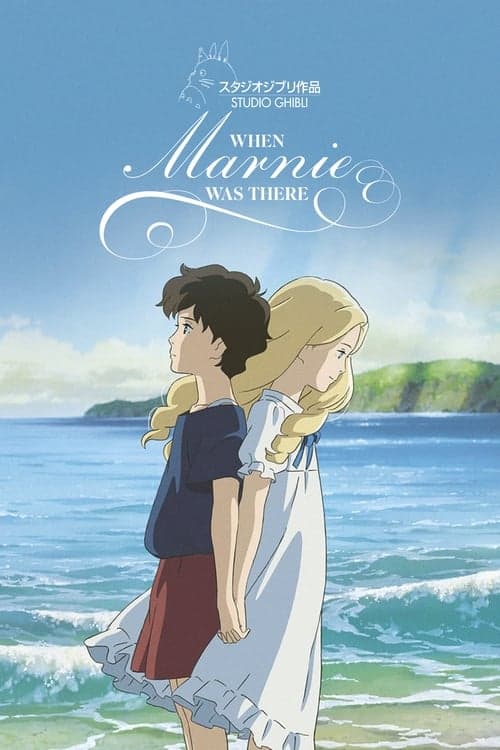
Hiromasa Yonebayashi’s introspective mystery follows Anna, a lonely and emotionally guarded girl sent to the countryside for her health, where she becomes drawn to an old marsh house and the enigmatic blonde girl she meets there, Marnie. As their bond deepens, the film moves through memory, longing, and uncertainty with a dreamlike gentleness, allowing its emotional revelations to emerge slowly rather than announce themselves. The quiet landscapes, shifting light, and stillness of the setting mirror Anna’s inner world, giving the story a hushed intimacy that makes every connection feel fragile and meaningful. With its softness and emotional restraint, When Marnie Was There becomes a story about loneliness, memory, and the healing power of finally feeling seen.
Watch for
- How the marshes, old mansion, and shifting light create an atmosphere where loneliness and longing seem to hang in the landscape itself, making place feel inseparable from Anna’s inner life.
- The changing emotional texture of Anna and Marnie’s bond, which moves through wonder, dependence, comfort, and unease without ever losing its fragile intimacy.
- The way the film reveals information gradually, allowing memory and mystery to intertwine so that emotional truth arrives through feeling first and explanation second.
- How Yonebayashi uses stillness, silence, and small gestures to make Anna’s healing feel tentative and hard-won, turning the story into a quiet meditation on self-worth and the need to be loved.
Production notes
When Marnie Was There was Hiromasa Yonebayashi's second feature as director, after The Secret World of Arrietty (2010). The film adapts Joan G. Robinson's 1967 children's novel of the same name, relocating the setting from English Norfolk to a coastal village in Hokkaido. Yonebayashi produced the film during what would turn out to be his final stretch at Studio Ghibli — he and producer Yoshiaki Nishimura would leave in 2014 to co-found Studio Ponoc. Hayao Miyazaki had no involvement; the film was developed entirely under Toshio Suzuki and Yonebayashi's direction. Sara Takatsuki voiced Anna, with Kasumi Arimura as Marnie. Composer Takatsugu Muramatsu scored the film. The GKIDS English-language dub featured Hailee Steinfeld as Anna, Kiernan Shipka as Marnie, Geena Davis, and John C. Reilly. Production took approximately two years. The film's reception in 2014 was complicated by widespread reports that Studio Ghibli was effectively winding down feature production — Miyazaki had announced retirement, and Yonebayashi's planned departure left the studio's future in significant question.
Trivia
- When Marnie Was There was Hiromasa Yonebayashi's second feature as director after The Secret World of Arrietty; he and producer Yoshiaki Nishimura left Studio Ghibli shortly after its release to co-found Studio Ponoc, an exodus that contributed to widespread reports that Ghibli was winding down feature production.
- The film adapts Joan G. Robinson's 1967 children's novel, relocating the setting from English Norfolk to a coastal village in Hokkaido; the location relocation required substantial research into Hokkaido's specific architecture and seasonal patterns.
- When Marnie Was There received an Academy Award nomination for Best Animated Feature, making it Studio Ghibli's fourth consecutive year with a nominee in the category; it lost to Big Hero 6.
- The film's depiction of the central friendship between Anna and Marnie has been widely interpreted as having queer subtext — particularly given the unusual emotional intimacy and the nature of the eventual revelation about Marnie's identity; readings have generated significant academic commentary.
- Studio Ponoc, which Yonebayashi and Nishimura founded after leaving Ghibli, has subsequently produced features (Mary and the Witch's Flower, The Imaginary) widely described as continuing the Ghibli traditional-animation legacy in ways the parent studio has only sporadically maintained.
Legacy
When Marnie Was There has aged into significant respect, particularly as the film whose 2014 release appeared to mark the end of Studio Ghibli's regular feature production — Miyazaki had announced retirement, Yonebayashi was about to leave to co-found Studio Ponoc, and the studio's future appeared genuinely uncertain. The film grossed approximately ¥3.55 billion at the Japanese box office and received an Academy Award nomination for Best Animated Feature. Critically, the film has been celebrated for its emotional restraint and its delicate handling of teenage interiority; the queer-subtext readings of Anna and Marnie's friendship have generated significant academic and critical commentary. Among Ghibli's films, Marnie occupies a unique transitional position — the last feature before Hayao Miyazaki's first retirement, the last feature before Yonebayashi's Studio Ponoc departure, the last feature before the lengthy hiatus that would extend until The Boy and the Heron in 2023. Its quiet emotional register marks it as the most introspective film in the studio's late-period catalog.