Whisper of the Heart
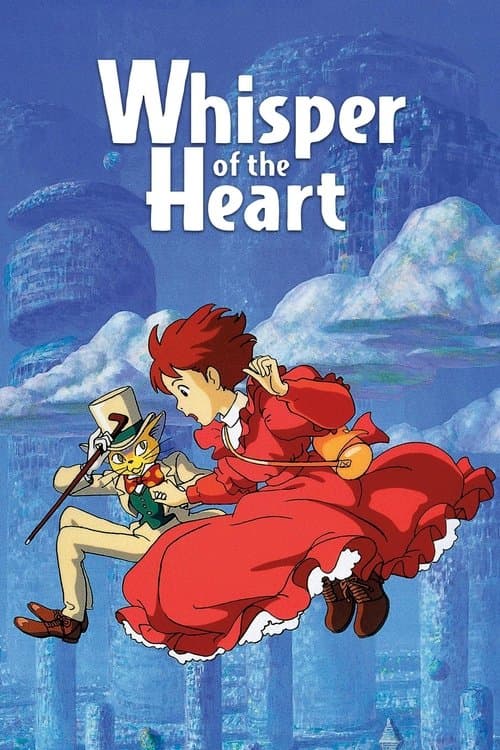
Vibe
Yoshifumi Kondō’s tender coming-of-age story follows Shizuku, a curious and book-loving middle schooler whose chance encounters with a boy named Seiji begin to awaken new feelings about love, ambition, and the kind of person she hopes to become. As her growing admiration for Seiji’s dedication pushes her to test her own creative potential, the film turns ordinary days of walking home, visiting libraries, and daydreaming into the emotional terrain of adolescence. Its Tokyo setting feels intimate and alive, grounding the story’s romantic and artistic longings in a lived-in world of trains, neighborhoods, and family spaces. With its sincerity, warmth, and belief in earnest effort, Whisper of the Heart becomes a story about first love, creative awakening, and the courage to begin becoming yourself.
Watch for
- How the film treats everyday Tokyo spaces—train lines, libraries, side streets, and bedroom corners—as emotional terrain, giving Shizuku’s inner life a vivid sense of place.
- The evolving connection between Shizuku and Seiji, especially the way admiration, irritation, and curiosity gradually become part of her awakening sense of purpose.
- The Baron sequences and Shizuku’s writing process, which show how imagination enters the film not as escape alone but as a first attempt to turn feeling into art.
- How Kondō captures the fragile intensity of early ambition, making the story less about immediate achievement than about the courage to test yourself before you know whether you are ready.
Production notes
Whisper of the Heart was directed by Yoshifumi Kondō, a longtime Ghibli animator and key animator on Grave of the Fireflies, Kiki's Delivery Service, Only Yesterday, and Porco Rosso. Hayao Miyazaki wrote the screenplay (adapted from Aoi Hiiragi's manga) and served as executive producer; the project was deliberately structured to develop Kondō into a major Ghibli director. The film's Tama New Town setting was carefully researched — Ghibli built up extensive reference photography of suburban Tokyo neighborhoods. Yoko Honna voiced Shizuku and Issei Takahashi played Seiji. The film's English-language theme song 'Country Roads, Take Me Home' (the John Denver original, plus a Japanese translation by Yoko Suzuki) became one of the most distinctive musical choices in any Ghibli feature. Composer Yuji Nomi scored the film. Tragically, Yoshifumi Kondō died of an aortic dissection in January 1998 at age 47 — only three years after Whisper of the Heart's release — making this his only completed feature as director.
Trivia
- Whisper of the Heart was Yoshifumi Kondō's only feature film as director; he died of an aortic dissection in January 1998 at age 47, only three years after the film's release, leaving Ghibli without its planned major successor to Miyazaki and Takahata.
- John Denver's 'Country Roads, Take Me Home' is used as a recurring musical motif throughout the film — Shizuku is translating it into Japanese as a school assignment; the song's inclusion required negotiating rights with the Denver estate, an unusual creative choice for a Japanese animated feature.
- The Cat Returns (2002), directed by Hiroyuki Morita, is set in the same fictional universe as Whisper of the Heart — the cat figurine 'The Baron' that Shizuku writes a story about in the original film becomes the protagonist of the spin-off seven years later.
- Hayao Miyazaki wrote the screenplay himself and served as executive producer specifically to develop Yoshifumi Kondō into a major directorial voice; Kondō's death in 1998 contributed to ongoing succession concerns at Ghibli that would persist for the next 25 years.
- The film's Tama New Town setting was extensively researched — Ghibli's animators photographed real suburban streets and buildings, and the Seijiseki Antique Shop in the film is closely modeled on a real Tokyo antique store that Miyazaki had visited.
Legacy
Whisper of the Heart has grown in stature over decades into one of the most quietly beloved entries in the Ghibli catalog — a film whose modest scale and resolutely non-fantastical contemporary setting have helped it find new generations of viewers. It grossed approximately ¥1.85 billion at the Japanese box office. Yoshifumi Kondō's death in 1998 made the film tragically singular — his only feature, leaving Ghibli without its planned major successor and contributing to ongoing succession concerns that would persist for decades. The film's central question — what does it mean to commit to creative work as a teenager? — has resonated particularly with young writers and artists. The Cat Returns (2002) extended the film's universe by following the supporting character Baron the cat figurine, and the connection between the two films has become a beloved bit of Ghibli internal continuity. Among Ghibli's films, Whisper of the Heart is most often cited as the studio's most thoroughgoing portrait of teenage interiority and creative ambition.